
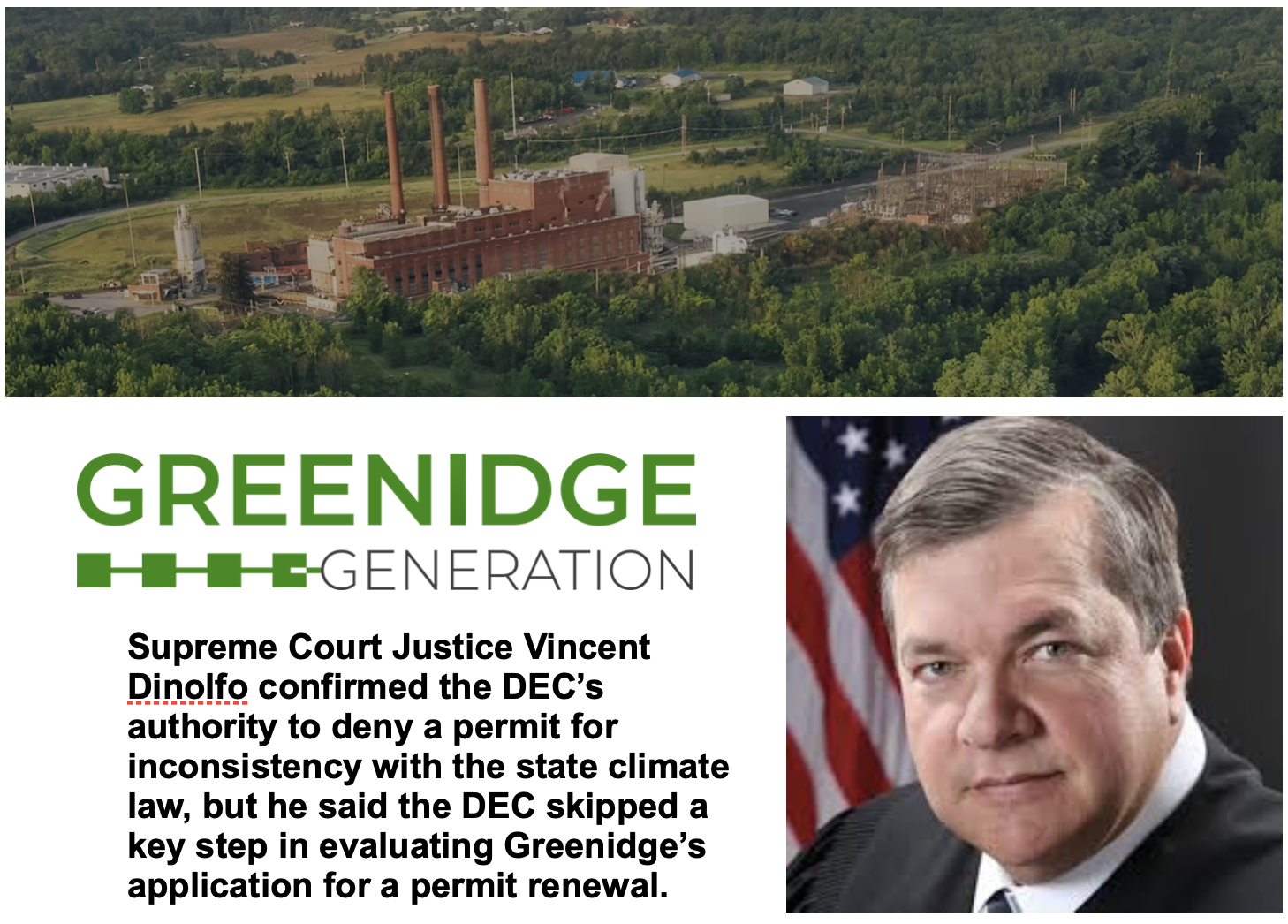
DRESDEN, Nov. 14, 2024 — A judge today annulled the state Department of Environmental Conservation’s denial of an air emissions permit for Greenidge Generation LLC’s power plant, effectively vacating a DEC plant closure order that was to set be carried out this week.
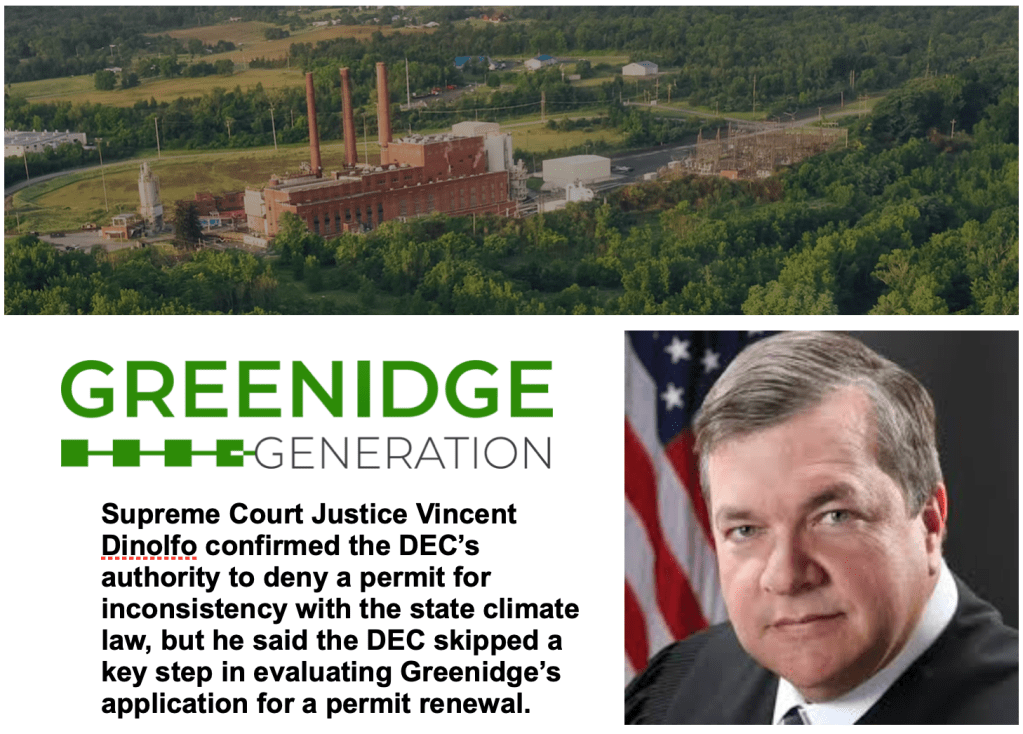
The decision allows Greenidge to continue operating its controversial Bitcoin mining facility at the plant on the shore of Seneca Lake in Dresden, pending further administrative proceedings within the agency.
State Supreme Court Justice Vincent M. Dinolfo ruled that the DEC has statutory authority to deny air permits for facilities that violate the state’s 2019 climate law, CLCPA (Climate Leadership and Community Protection Act). But he concluded that the agency committed an “error of law” when it failed to consider potential justification for the plant’s inconsistency with the climate law mandates.
The judge annulled a May 8 decision by DEC Regional Director Dereth Glance that had rejected Greenidge’s application to renew its Title V air emissions permit. In that ruling, Glance had terminated a lengthy adjudicatory hearing process within the agency, finding that the plant’s emissions were inconsistent with the goals of CLCPA.
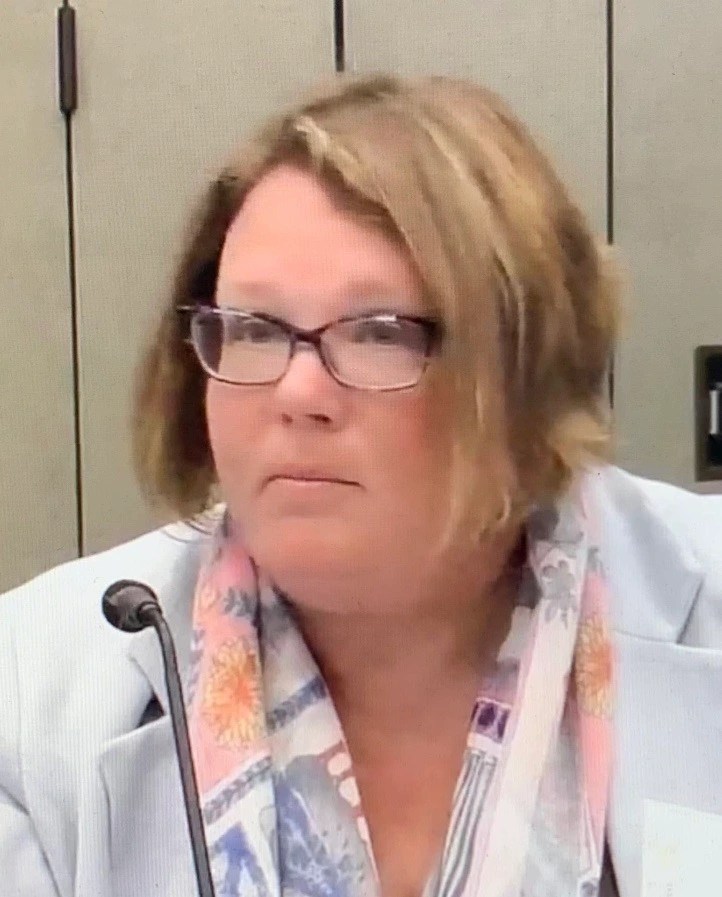
But Dinolfo ruled that Glance’s denial “had no rational basis for its decision to forego CLCPA’s justification analysis…. [T]he denial of the renewal application … was thus affected by an error of law and was arbitrary and capricious.”
The judge ordered Greenidge’s permit application review to be “remitted to the DEC for further proceedings,” including an analysis of whether the plant’s inconsistency with CLCPA was justified.
That analysis could delve into the plant’s role in supplying power to the state’s electric grid when it is not powering the Bitcoin mining operation.
“A thorough justification analysis could have relied on input from the (state Public Service Commission)” and the New York Independent System Operator (the state electric grid), Dinolfo wrote.
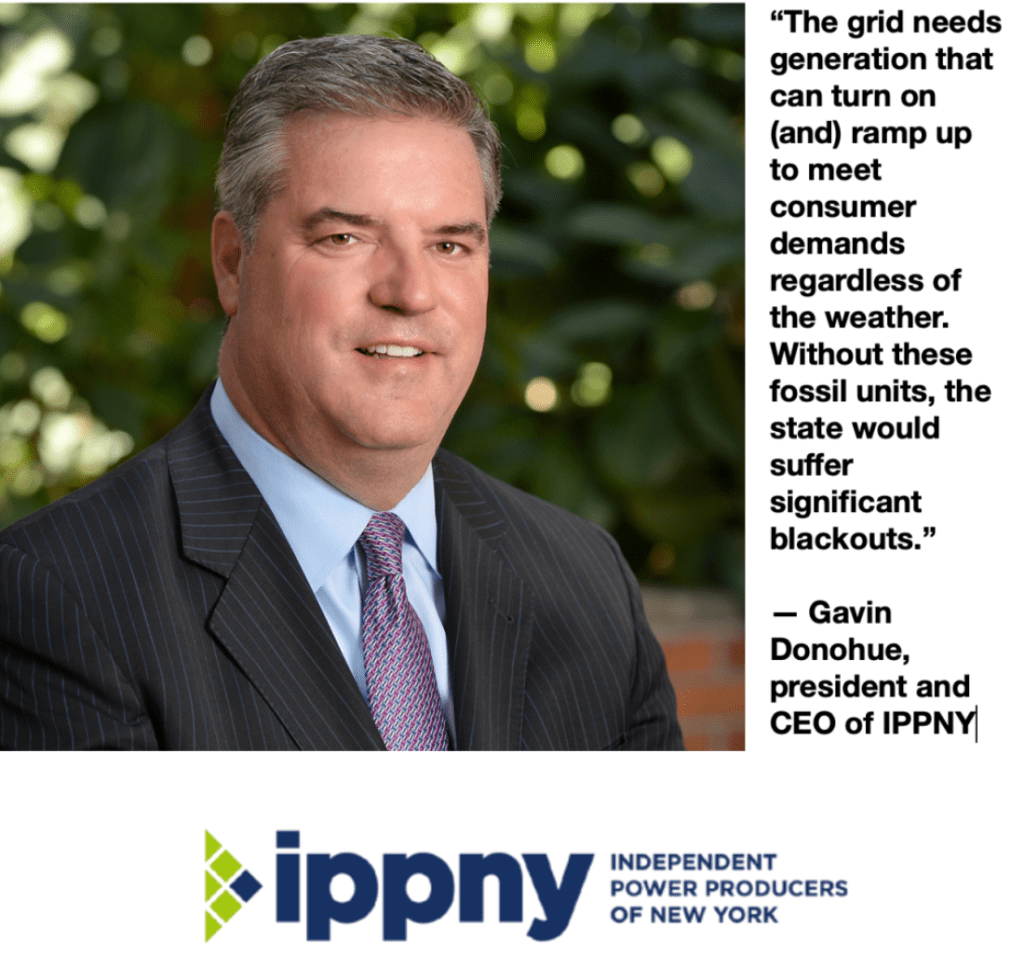
Greenidge had argued that the plant supplies power to the grid when called upon to do so, and that the grid relies on that intermittent power supply. Both the Independent Power Producers of New York and the Business Council of New York state weighed in by filing amicus briefs and/or affidavits to buttress that claim.
Greenidge had also argued — unsuccessfully — that CLCPA does not confer on the DEC the authority to deny a permit application. The company asserted that the climate law required the agency to “consider” whether permitting decisions conflict with CLCPA emissions goals but stopped short of granting authority to deny a permit because of such a conflict.
Dinolfo rejected that argument.
The judge noted that an Orange County Supreme Court judge, in a 2022 case involving Danskammer Energy, found that the climate law did, in fact, grant denial authority to the agency.
The Orange County court rejected Danskammer’s bid to overturn the DEC’s denial of the Title V air emissions permit it had been seeking, and Dinolfo quoted from that decision:
“The plain language of the statute must be interpreted to grant the DEC the requisite authority to deny a permit when the grant of the permit would be inconsistent with or interfere with the attainment of the goals the CLCPA, and the grant cannot be justified or the adverse effects mitigated.”
In response to the DEC’s May 8 permit denial, Greenidge had filed suit against the agency, and it sought a preliminary injunction to block a state order to permanently close the plant.
A formal closure order was to be carried out Sept. 9. But final enforcement of that order was postponed to Nov. 1, and then to Nov. 14. Dinolfo’s ruling denied as moot the motion for an injunction. The plant is now free of any mandate to close.

The judge had allowed three local environmental groups — Seneca Lake Guardian, the Sierra Club and Committee to Preserve the Finger Lakes — to participate as parties in the case because each had members who were directly affected by the plant’s operation.
They have been represented by Earthjustice and the Albany law firm Whiteman Osterman & Hanna.
“Today’s ruling confirms what we’ve known all along: that the DEC has the statutory authority under New York’s climate law to deny Greenidge the air permit that allows it to power its cryptomine,” said Lisa Perfetto, a senior attorney in the Clean Energy Program at Earthjustice.
“While I’m relieved by the precedent set by today’s decision, I’m infuriated that Greenidge can continue to operate while the case goes back to administrative court,” said Yvonne Taylor, vice president of Seneca Lake Guardian. “The cryptomining operation has been sucking up millions of gallons of water a day from Seneca Lake and dumping it back in at dangerously hot temperatures. For years, Greenidge has been polluting local air and spewing climate-warming greenhouse gasses into the atmosphere.”
Greenidge’s common stock, which is traded on the NASDAQ market, rallied on the news of Dinolfo’s ruling, which became public only minutes before the market’s 4 p.m. closing bell. The company’s common shares closed at $2.47 but then leaped in after-hours trading to $3.45.

 Water Front- Peter Mantius
Peter, Without the details, I don’t understand what has happened here. Those supporting the Greenidge position were the organizations that claimed that its operation was necessary to assure backup power in times of heavy usage.
Does this mean that in these emergency situations, violations of the Clean Air Act are permitted? If it is allowed then….why should it be allowed under conditions which are not “emergency”?
What “administrative” things does the DEC have to do to come back with support for a denial of a permit? Or does this decision essentially say the for critical functions like supporting a power grid, the Clean Air Act does not apply?
Thanks for tracking this…Ed
LikeLike