
DRESDEN, Sept. 18, 2024 — Rejecting arguments by Greenidge Generation LLC, a state Supreme Court judge will allow three environmental groups to argue against the company’s bid for an injunction to save its Dresden power plant.
The state Department of Environmental Conservation is poised to enforce an order to shut down the plant on Nov. 1 after it denied the company a new Title V air emissions permit. The agency said the plant has failed to comply with the state’s 2019 climate act.
Greenidge, which operates a Bitcoin mine at the Yates County plant, filed suit against the agency in August, seeking a preliminary injunction to suspend the order.
Four environmental groups petitioned to intervene as formal parties in the case, arguing that the DEC did not adequately represent the interests of their members who “live, work and recreate near the plant.”
The company promptly objected on the grounds that they would “only delay and unduly complicate” Greenidge’s suit. Their involvement should be limited to filing amicus curiae briefs, it argued.
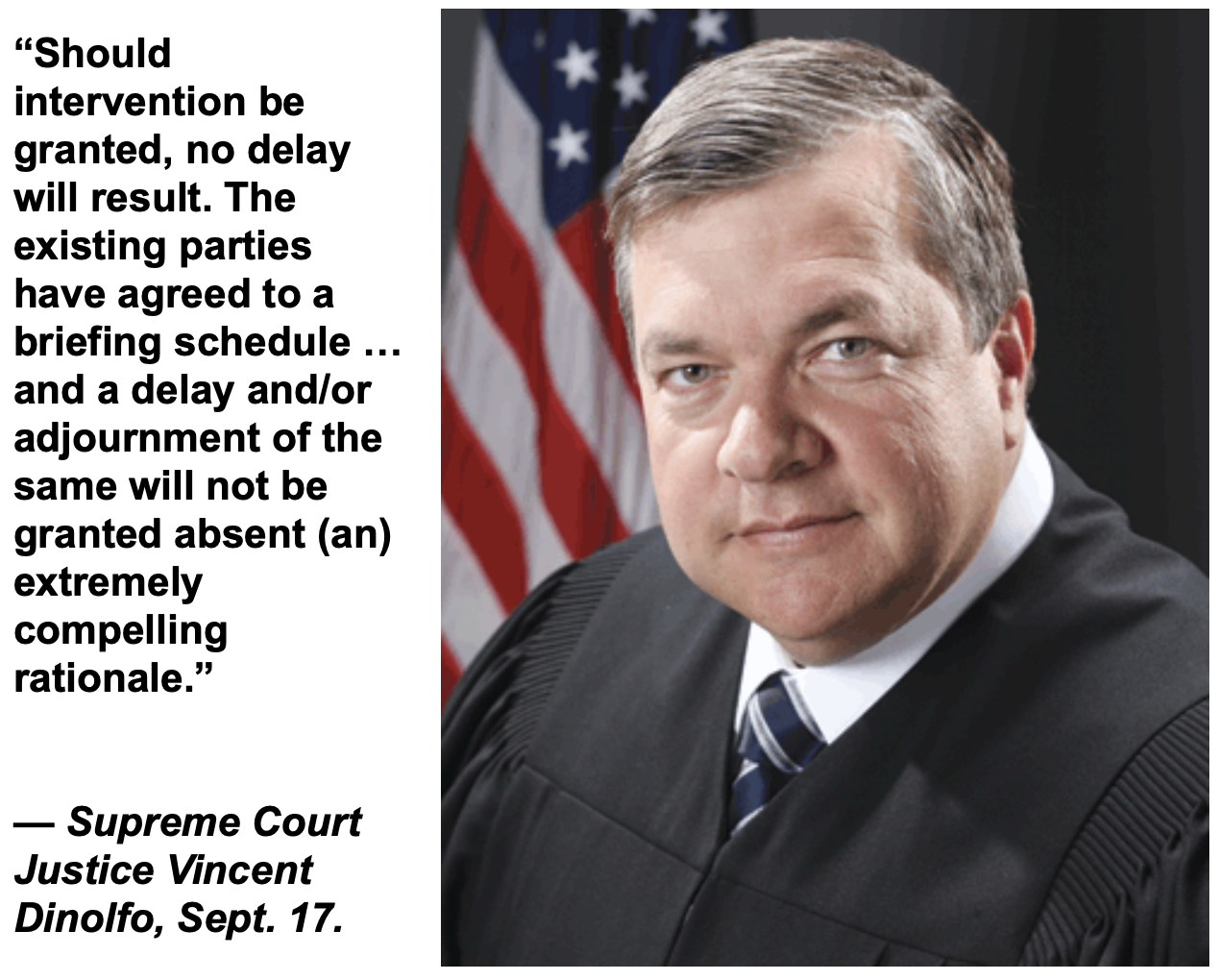
But Supreme Court Justice Vincent M. Dinolfo ruled Tuesday that three of the four petitioners — Seneca Lake Guardian, The Committee to Preserve the Finger Lakes and Sierra Club — were entitled to participate as formal parties in the case. The judge denied the fourth group, Fossil Free Tompkins, party status but allowed it to file an amicus curiae brief.
Dinolfo drew a distinction between the groups based on the number of members each has who live in Yates County.
In his order, Dinolfo explained: “Should intervention be granted, no delay will result. The existing parties have agreed to a briefing schedule … and a delay and/or adjournment of the same will not be granted absent (an) extremely compelling rationale.”
Late last month, attorneys for Greenidge and the DEC jointly proposed a briefing schedule, which Dinolfo has accepted. The judge has set a hearing for Oct. 29 in Yates County Supreme Court in Penn Yan.
The DEC — and now the intervenors — have until Oct. 10 to file briefs, and Greenidge has until Oct. 24 to file its response brief.
The four environmental groups are represented by Lisa K. Perfetto and others from Earthjustice, and Philip H. Gitlen and others from the Albany law firm Whiteman Osterman & Hanna.
On behalf of Greenidge, Yvonne Hennessey and others from the Barclay Damon firm opposed the groups’ bid to intervene in a Sept. 4 brief.
Hennessey argued that granting them full party status would open the door for “dozens if not hundreds of participants” to seek party status in other litigation over permit rulings based on compliance with the state’s 2019 climate law, the CLCPA (Climate Leadership and Community Protection Act). She warned against “a dangerous slippery slope” if the four environmental groups were granted anything more than amicus status in the Greenidge case.
The environmental groups countered that the standard for intervention has been “liberally construed” by the courts.
In his Sept. 17 order, Dinolfo acknowledged Greenidge’s argument, writing that “a permissive intervention doctrine must still have a logical endpoint if there is a distinction between party and amicus status…”
But granting party status to three groups that have dozens of members from Yates County while denying it to Fossil Free Tompkins, which has none, maintains that distinction, the judge reasoned.
In a brief filed Aug. 28, attorneys from the environmental groups argued that Greenidge had failed to present convincing evidence of any of the three requirements for a temporary restraining order or a preliminary injunction: likelihood of success, irreparable harm or favorable balance of equities.
Greenidge isn’t the first company to challenge DEC in court for denying an air permit for failure to comply with CLCPA emissions limits.
In 2022, a judge dismissed Danskammer Energy’s case aimed at overturning the DEC’s action, affirming the agency’s interpretation of its authority under CLCPA.
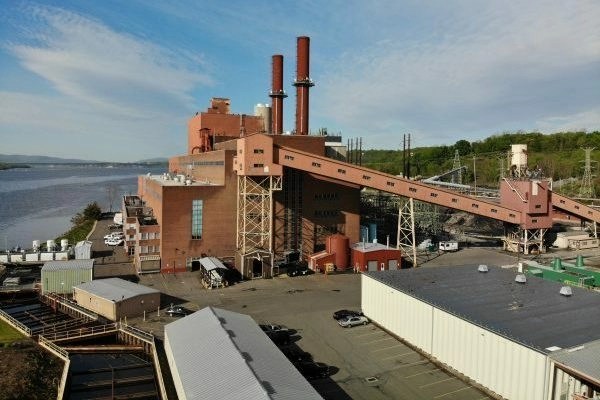
Greenhouse gas emissions from the Greenidge plant have risen dramatically since it launched its Bitcoin facility in 2020.
The plant had operated for decades burning coal before it was mothballed from 2011 to 2016. New owners converted it to burn natural gas and restarted it in 2017 to provide power as needed to the electric grid — typically operating at far less than half its capacity.
The DEC never required Greenidge to prepare an environmental impact statement for the plant — either for its restart or for a major expansion of its Bitcoin operation.
When environmental groups sued to challenge state air and water permits granted without an EIS, courts sided Greenidge and the DEC.
But on June 30, 2022, the agency denied the company’s application to renew its air permit. Greenidge appealed that decision within the agency, but that appeal was terminated in May.
In early June, the DEC ordered the plant to shut down by Sept. 9, triggering its lawsuit seeking an injunction.
The agency has since agreed to delay enforcement of its order until Nov. 1.

 Water Front- Peter Mantius
I am cautiously optimistic. Thanks to our environmental guardians and a judge with no bias, we have a chance to shut them down, help our Seneca Lake and our lungs..
LikeLike
Wonderful news for Yates County AND if this sets a precedent for NY then maybe other nuclear power plants converted to bitcoin operations can get shut down also?
What is the status of the AES plant on Cayuga Lake?
LikeLike