
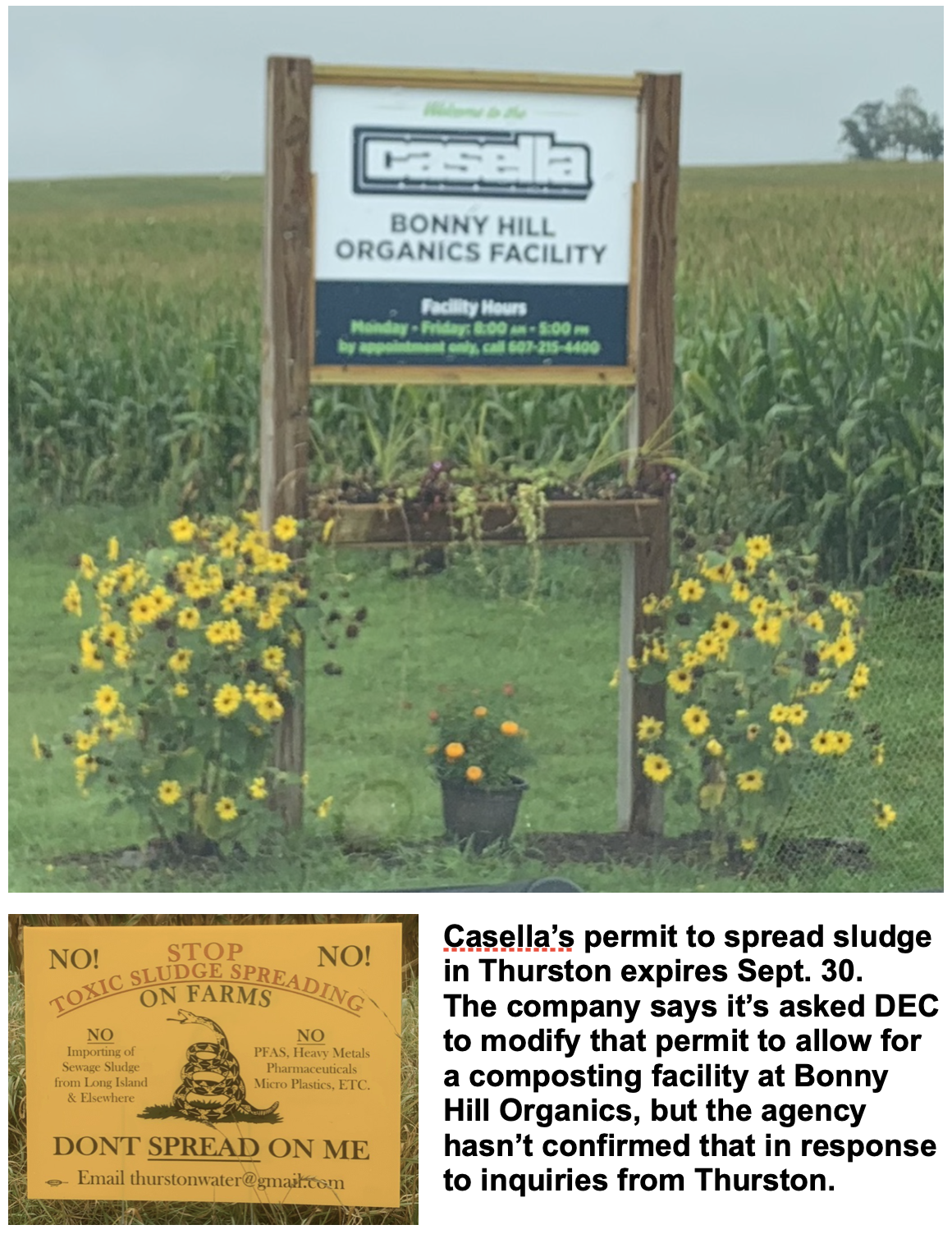
THURSTON, Aug. 19, 2024 — Casella Waste Systems Inc. has offered to drop all plans to spread sewage sludge on fields in Thurston if the Steuben County town will allow to operate a composting facility instead at its Bonny Hill Organics site.
But Town Supervisor Michael Volino said Sunday that Thurston won’t be accepting that informal offer made to him in an Aug. 5 letter from Tom West, the company’s attorney.
“We don’t want anything to do with composting or sewage sludge,” Volino said.
The standoff comes two years after Casella quietly bought or leased 2,789 acres in the towns of Thurston, Cameron and Bath and launched a plan to import sewage sludge, or biosolids, from a huge Long Island sewage treatment plant.
Thurston responded by enacting a local ban on sludge spreading last October, which triggered a Casella lawsuit in February that sought to annul the law.
Since then Casella has been attempting to enlist the state Department of Agriculture and Markets as an ally in its bid to continue sludge spreading in Steuben under the shield of the state’s Right to Farm law.
The company had reason to expect the agency would weigh in, given that Gov. Kathy Hochul released a draft state solid waste management plan last spring that called for a sharp increase in sewage spreading on farm fields statewide. Since then the state has issued draft regulations for sludge spreading.
But New York’s waste plan has recently come under fire because several other states have restricted sludge spreading, citing public health risks from toxic contaminants, including PFAS ‘forever’ chemicals. Maine has banned the practice outright.
The Hochul Administration’s stance is less clear now because Ag and Markets has remained on the sidelines in the Thurston controversy. And Casella, lacking overt state backing, has dropped its suit against the town.


“Casella has decided not to revive the litigation given the failure to date of the Department of Agriculture and Markets to act…,” West said in his recent letter to Volino.
West went on to say: “Casella is moving forward with a permit modification from the state Department of Environmental Conservation to re-establish and operate the composting facility at the Bonny Hill location.”
But Volino said such a permit modification would violate an existing town moratorium on major changes to waste operations in Thurston.
“They can’t do that because it would be classified as a major (permit) modification, which is prohibited under our moratorium,” he said.

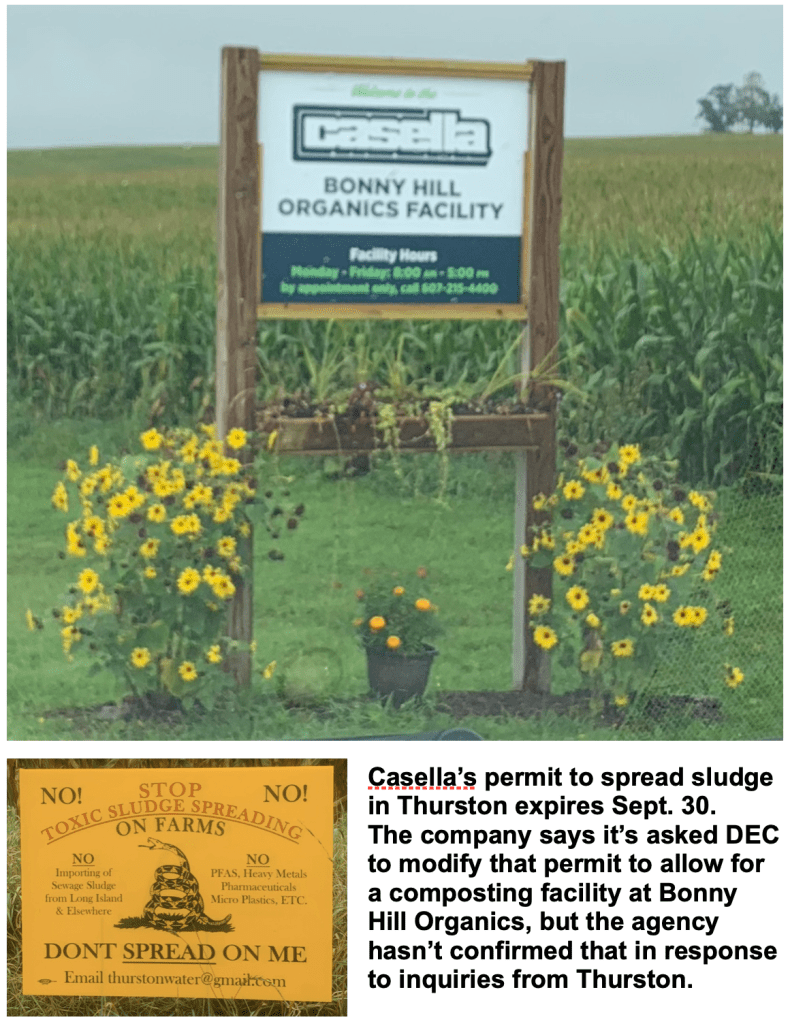
Casella’s state permit to spread sewage sludge will expire on Sept. 30.
Volino said he has repeatedly asked the DEC whether Casella has applied to extend or modify that permit, but he has not received a response. Neither has the DEC responded to related Freedom of Information requests filed several weeks ago by Rachel Treichler, an attorney who has represented the town.
Under state law, an applicant can indefinitely extend the effective date of an existing permit simply by filing an application to renew or modify. Volino expressed frustration that the agency has declined to confirm or deny that Casella has filed such an application.
Casella is based in Maine and runs waste facilities throughout New England. It operates in Steuben County under various subsidiaries or affiliates, including New England Waste Services of M.E. Inc. and Casella Organics. Its facility in Thurston is called Bonny Hill Organics.
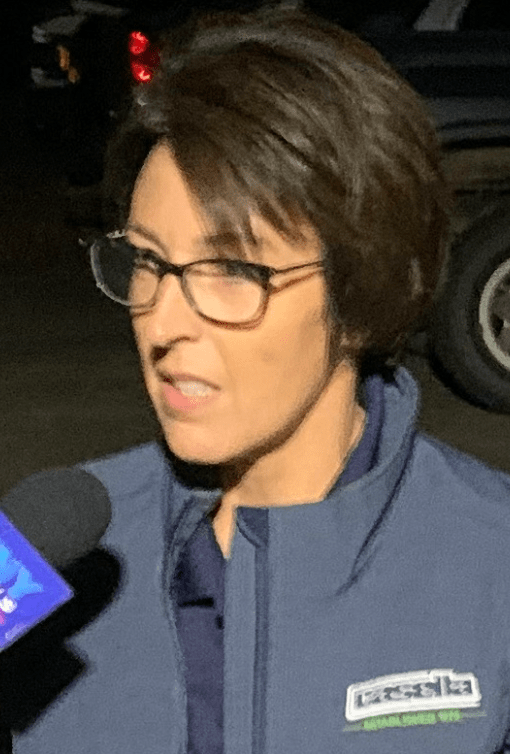
Mary Rayeski, manager of Bonny Hill Organics, did not respond to email and phone messages. She forwarded those messages to Casella spokesperson Jeff W. Weld, who provided a statement this morning:
“Casella is currently assessing the potential for future composting operations at Bonny Hill Organics while continuing our work to revitalize the facility, including the closure of existing lagoons and other improvements to the site’s infrastructure. We’re proud of the work we have accomplished in improving the site and bringing the facility up to modern standards thus far and we look forward to engaging with the appropriate local, state, and federal agencies on the potential for restarting composting operations.”
Casella entered the Thurston market quietly in July 2022 when it bought or leased the 2,789 acres from a long-time Steuben County farming family that operates under Leo Dickson & Sons Inc. or affiliated companies.
Local officials didn’t learn about the deal until WaterFront published an article about it in November 2022.
The Dicksons had held a 2019 DEC permit to spread sludge accepted from more than two dozen sewage treatment plants across the Finger Lakes, the Southern Tier and northern Pennsylvania. The DEC allowed the Dicksons to transfer that permit to Casella last September.
Casella also sought the agency’s permission to add a new source of sludge: the Bay Park sewage plant near JFK International Airport. The plant produces as much sludge as all of the smaller Dickson sludge sources combined.
As Hochul’s state agencies — Ag and Markets and the DEC — have gone silent on sludge in Steuben, the neighboring town of Cameron is planning to enact its own sludge ban.

At first the Cameron Town Board sought to enact a measure identical to Thurston’s Local Law 3. But earlier this summer, Steuben County officials rejected that effort, saying it required modification.
Cameron Town Supervisor Robert Manly said the board has held preliminary discussions with Earthjustice, which represents Thurston, about potential modifications.
Manly said the town had planned to hold a public hearing on its possible sludge spreading ban on Aug. 14, but he cancelled the meeting the day before. He said the town will hold a public hearing “when we get the ducks lined up,” possibly in October.
“We don’t want any more stuff in the ground,” Manly said of sludge spread by the Dicksons on fields in Cameron.
Meanwhile, the Dickson family continues to farm its land.
This past winter it asked the Department of Ag and Markets to investigate whether the Thurston sludge ban constituted an unreasonable restriction of its operation. Brett Dickson argued that depriving his family the freedom to apply sewage sludge as their crop fertilizer would create an economic hardship because they would be forced to buy expensive commercial fertilizers.
If the department concludes the ban is “unreasonable,” the town will have the burden of proving that sludge spreading is a health hazard.
Evidence abounds that it is — from other states, including Maine and Michigan, from TV specials, from lawsuits against EPA, and closer to home.
“Farmland application (of sewage sludge) provides a direct pathway for contamination of food crops, meat, and dairy products with persistent organic toxins, including hundreds of PFAS compounds,” Murray McBride, a professor emeritus at Cornell University, wrote in a June 2023 memo.

PFAS (per- and polyfluoroalkyl substances) are man-made chemicals used in hundreds of popular stain-resistant and non-stick commercial products. They persist in the environment and bioaccumulate. Even in tiny concentrations — a few parts per trillion — they can harm human health.
In Steuben County, the Sierra Club recently sponsored tests for PFAS chemicals in water wells, streams and ponds adjacent to fields spread with municipal sludge.
The data showed the tests from sites adjacent to sludge-spread fields had average PFAS levels nine times higher than from sites that aren’t adjacent to sludge fields.

 Water Front- Peter Mantius
