
ALBANY, Aug. 12, 2024 — The state’s Green Amendment would be rendered “toothless” if a state court in Albany grants requests to dismiss a lawsuit seeking to block the expansion of Seneca Meadows Inc. due to odor violations, an attorney for plaintiffs suing SMI argued in a filing Aug. 9.
A week earlier, State Attorney General Letitia James had urged the Albany court to drop the suit against the state Department of Environmental Conservation and the state’s largest landfill.
James asserted that a Rochester appeals court’s dismissal of a separate Green Amendment lawsuit against the High Acres landfill in Fairport was binding precedent in the SMI case.
But Philip H. Gitlen argued on behalf of Seneca Lake Guardian (SLG) and others that the two cases raise fundamentally different legal questions.
While plaintiffs in the High Acres case unsuccessfully asked the court to compel the DEC to take actions to mitigate noxious odors, the SMI plaintiffs don’t seek to compel any enforcement action.

Rather, the SMI plaintiffs ask the court to declare that Seneca Meadows’ current activities violate their constitutional right under the Green Amendment to “clean air” and a “healthful environment.” Secondly, they seek a court injunction blocking the landfill’s proposed expansion on the grounds that it would allow the alleged constitutional violation to continue.
The DEC, Gitlen argued, “seeks to continue to administer a permitting system under which some New York citizens are forced to put up with breathing air that makes them nauseous and routinely have to face disgusting bird droppings.
“SMI seeks to continue to impose those unconstitutional burdens on its neighbors. And the attorney general (James) stands by advocating for the ‘status quo.’”
Gitlen, a former DEC general counsel, said James’ contention that the High Acres case represents binding precedent in the Seneca Meadows case “mischaracterizes” SLG’s arguments and “misstates the potential applicability of (the High Acres decision) to those pleadings.”

James based her defense of the DEC in the SMI case on the High Acres decision issued by a panel of the Fourth Judicial Department of the state’s Appellate Division on July 26.
Seneca Meadows filed a separate brief Aug. 2, asking the Albany court to dismiss it as a defendant on the grounds that the claims are barred by the High Acres “binding precedent.”
The appellate panel had reversed a trial court when it dismissed the case brought by the nonprofit group Fresh Air for the Eastside Inc., against the DEC, the owner of High Acres (Waste Management Inc.), and the City of New York, which supplies most of its garbage.
In its ruling, the appellate court held that citizens can’t use the Green Amendment to compel a state agency to crack down on odor rule violations.
Enforcement decisions of an administrative agency are unsuitable for judicial review, it said, “unless the administrative agency has consciously and expressly adopted a general policy that is so extreme as to amount to an abdication of its statutory responsibilities.”
But that leaves citizens with no judicial remedy to those near SMI who are suffering immediate harm from noxious odors that SMI emits, Gitlen said.
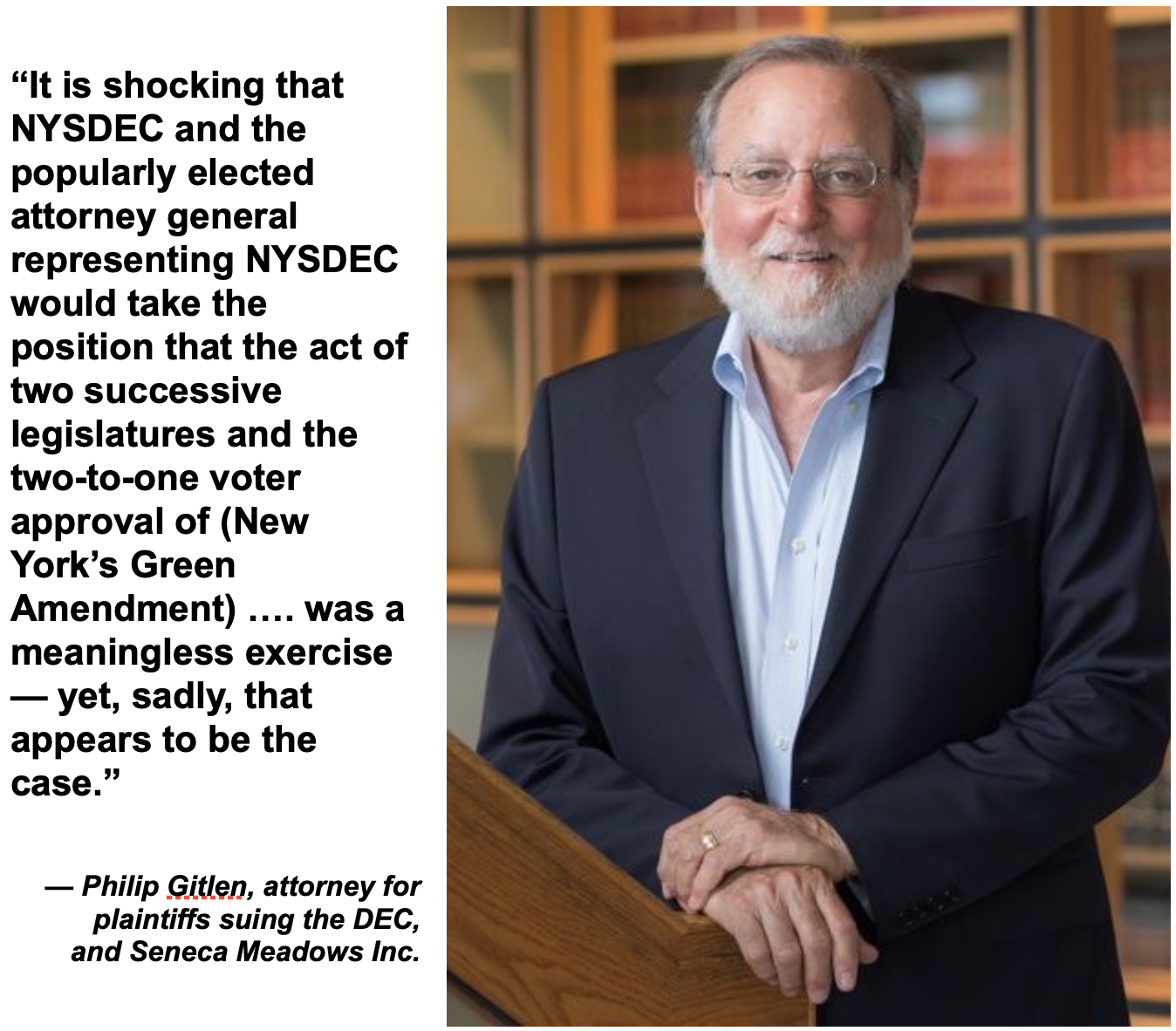
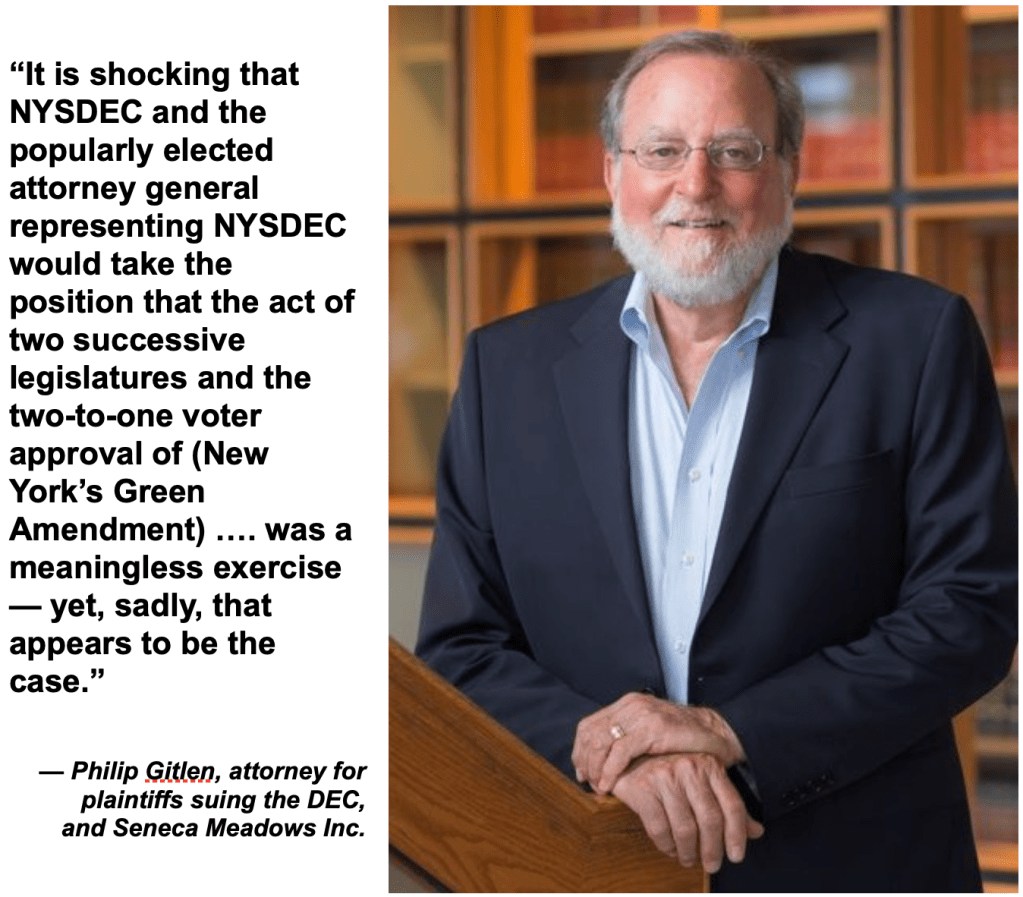
“While such an argument could be expected from SMI,” Gitlen wrote, “it is shocking that NYSDEC and the popularly elected attorney general representing NYSDEC would take the position that the act of two successive legislatures and the two-to-one voter approval of the Environmental Rights Amendment…. was a meaningless exercise — yet, sadly, that appears to be the case.”
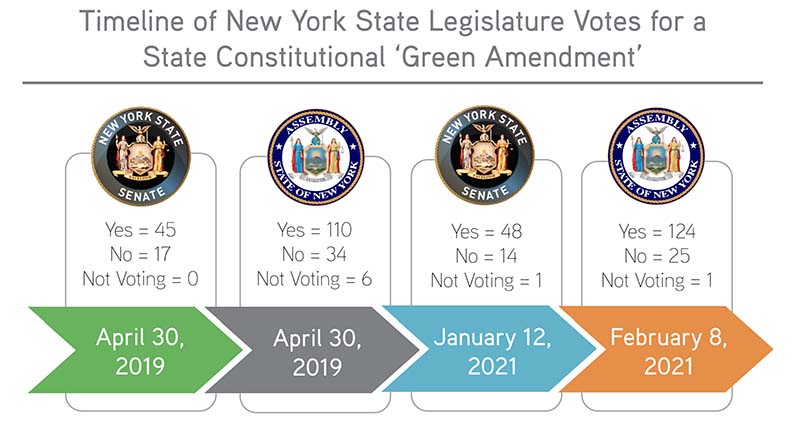
The Environmental Rights Amendment (better know as New York’s Green Amendment) took effect in January 2022, following a statewide referendum the previous November.
It guarantees citizens a constitutional right to “clean air, clean water and a healthful environment.”
The two landfill odor cases are likely to establish how the state court system applies and enforces the new right.
An attorney for the Fresh Air group said her clients plan to appeal the Fourth Department’s ruling to the state’s highest court, the Court of Appeals.
Meanwhile, Seneca Meadows is waging a highly controversial bid to continue operating beyond its currently required closing date in December 2025.
The landfill has applied for a DEC permit that would allow it to grow substantially and increase its height by some 70 feet, an expansion that would provide space to continue operating at current rates until 2040.
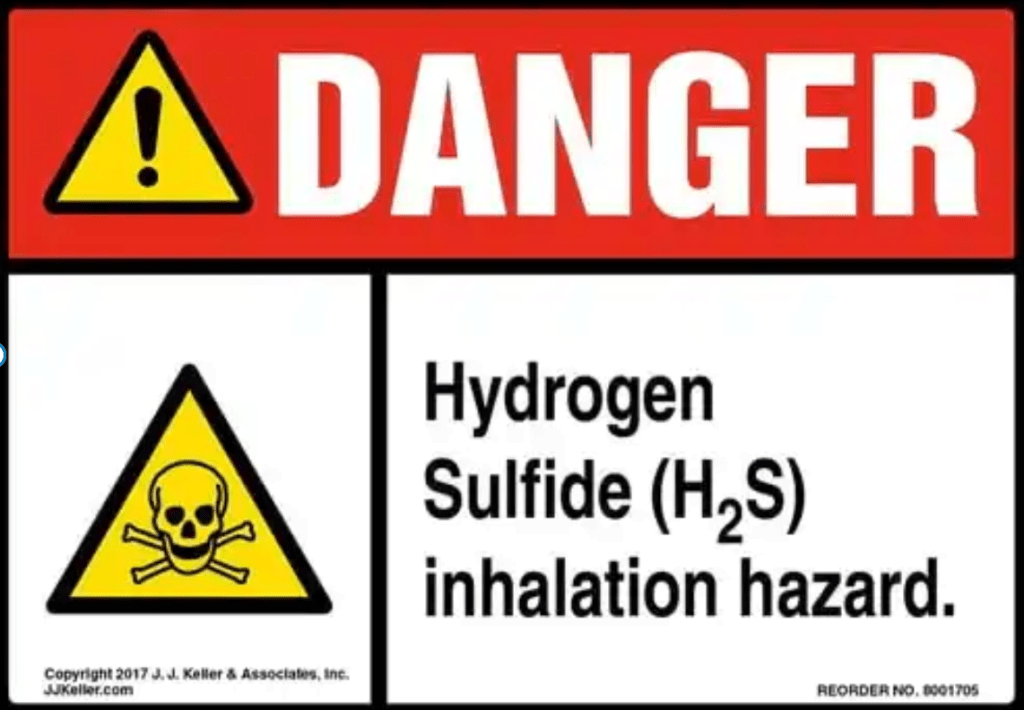
Waterloo Container Co., a co-plaintiff with SLG, has long criticized the landfill and the DEC for failure to control sewer gas (hydrogen sulfide) and landfill odors in and around the towns of Seneca Falls and Waterloo.
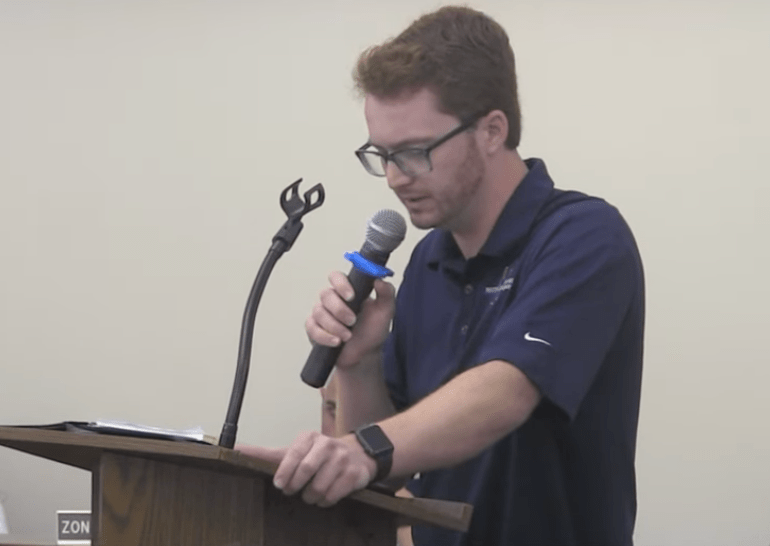
On Aug. 6, a Waterloo Container spokesperson urged the Seneca Falls Town Board to deny the landfill its local operating license due to its failure to control odors.
“Over the past two months, our records indicate that 23 percent of our workdays in June and July were marked by unbearable odors,” Mark Pitifer told the town board. “On one occasion in June, employees became ill do to the intense and persistent odors.”
Pitifer said landfill employees assigned to assess odor complaints reported by Waterloo Container and confirmed by town zoning officials had consistently reported “No Odor Detected” over the past two months. Those landfill-generated reports are sent to the DEC.
A YouTube recording of the town hall meeting here shows Pitifer’s statement beginning at the 8:48 minute mark.

 Water Front- Peter Mantius