

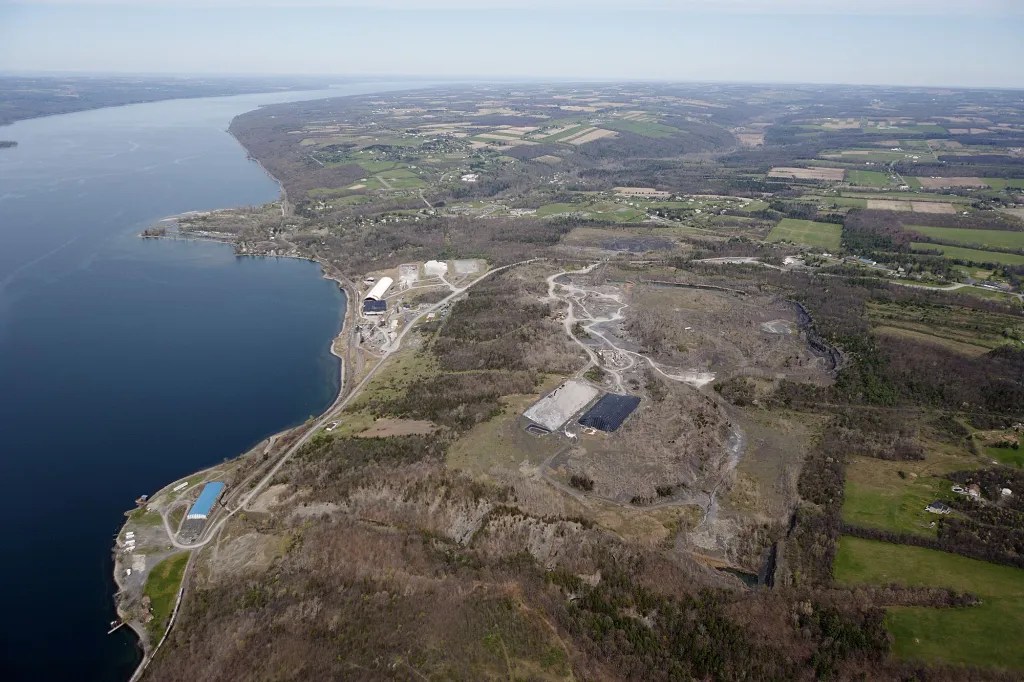
LANSING, Nov. 29, 2023 — The potential sale of Cargill’s huge salt mine under Cayuga Lake has prompted new state legislation to require the company — or a mine buyer — to provide financial security to cover any damages due to a roof collapse or mine flood that damages the lake.

The bill would also add new triggers for the mine’s first full environmental impact statement (EIS) and require a detailed mine closure plan.
For decades, many Tompkins County residents and their state representatives have decried the lack of public information on the risks posed by the mine, and they have lobbied without success for an EIS.
That lobbying intensified in July following an unconfirmed media report that Cargill had hired Deutsche Bank to help it find a buyer for the Cayuga facility and another salt mine in Cleveland.
Cargill has declined to comment on the report in The Deal, which has not been matched by any other financial publication.

The bill sponsored by Sen. Lea Webb (D-Binghamton) was introduced Nov. 7 and assigned to the Senate Rules Committee. Assembly Member Anna Kelles (D-Ithaca) introduced a similar bill in the state Assembly, where it was sent to the Environmental Conservation Committee.
“Without intervention from the (state Department of Environmental Conservation), the lake could become permanently salinated, destroying 100,000 residents’ source of drinking water and endangering our region’s $3 billion recreational wine and agritourism economy, which employs 60,000 people,” Webb said.
A day later, the Tompkins County Legislature voted 11-3 for a resolution calling for Cargill to post an environmental bond in an amount to be set by an independent natural resource economist. It was mailed to Gov. Kathy Hochul and other state representatives and regulators.
“Cargill may now be positioning itself to sell the mine, a triggering event that the DEC should use to establish and enforce Cargill’s accountability for the long-term safety of Cayuga Lake regardless of future ownership of the mine,” the Nov. 8 resolution says.

To press their arguments further, several members of the environmental group CLEAN (Cayuga Lake Environmental Action Now) plan a conference call next week with Dereth Glance, the director of DEC’s Region 7 office in Syracuse.
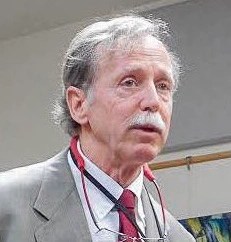
“We want to rattle (her) cage a bit, saying, ‘A salt mine under a lake is a ticking time bomb. You need to get on this,’” said John Dennis, the group’s co-founder.
Regulatory authority over the mine is shared by the DEC and the state Office of General Services, which has provided consent orders that allow Cargill to mine salt on leased state land under Cayuga Lake since the 1970s.
While those consent orders don’t call for an EIS, one would normally be required by the 1975 State Environmental Quality Review Act, given the potential harm a mining accident could cause to regional drinking water.
But in 1997 Cargill directly challenged the DEC’s authority to apply SEQRA regulation to the mine.
When Cargill sought to renew its DEC permit and add 5,056 acres to the mine that year, the agency asked for further information, as called for under SEQRA. The company responded that “the department lacks statutory or regulatory authority to regulate (Cargill’s) underground mining operations…”
The company did agree in 2000 to provide an environmental assessment of the mine — but only if the agency agreed to treat its documents as trade secrets, locking the public out. By contrast, public involvement is a key element of an EIS under SEQRA.
When a citizen launched a multi-year attempt to use the Freedom of Information Law to pry loose Cargill documents that the DEC had agreed to withhold from the public, an administrative law judge within the agency rejected Cargill’s trade secrets claim.
The ALJ found that “strong public policy considerations support release of the information withheld in this case.” But the finding was substantially overturned by an assistant DEC commissioner, who blocked FOIL requests for seismic data and analysis of geological stability.
Since then the DEC has repeatedly sided with Cargill in court arguments against ordering an EIS.
The resulting lack of transparency motivated CLEAN to urge Hochul to intervene, and it provided incentive for Webb to develop her bill.
Dennis noted in testimony before the Tompkins resolution vote that Lake Peigneur in Louisiana was a freshwater lake before it was salinized by the accidental flooding of a salt mine beneath it in 1980.

Webb pointed to the 1994 collapse and flooding of the Retsof salt mine in Livingston County, roughly 70 miles west of the Cayuga mine. The accident at what was then the nation’s largest salt mine caused sinkholes and damage to bridges and roadways. It also ruined an aquifer and many private water wells.
Independent geologists have noted rock formations above the Cayuga mine have characteristics in common with Retsof.
In fact Cargill and the DEC have acknowledged a series of “anomalies” in the rock above the Cayuga mine, weaknesses that have the potential to lead to leaks or roof collapses. The agency bars the company from digging salt around them. One of the anomalies has been described as a fault. Retsof also had a significant fault.
“The similarities of these two mines has the communities around Cayuga Lake and its watershed very concerned about the environmental and ecological risks that an accident or other seismic issue to the salt mine would cause to the lake,” Webb said when she announced the filing of the bill.

Webb can expect her action to be a major issue in her bid for reelection to the Senate. Mike Sigler, one of the three Tompkins legislators who voted against the county’s Nov. 8 resolution, is a Republican who has announced plans to challenge her.
Shortly after news broke about Cargill’s search for a buyer, CLEAN issued a statement calling for the state to impose a $10 billion environmental bond — up from the $3.5 million in financial assurance the company currently provides. Neither the Tompkins resolution nor Webb’s bill contain a specific dollar figure for financial assurance. But the bill includes a provision allowing for the recovery of damages caused by a mining accident.
The bill would also require Cargill to develop a plan to close the mine in accordance with the state’s Mined Land Reclamation Law. The DEC has never required a detailed closure plan.

Cargill recently closed its Avery Island mine in Louisiana following a roof collapse that killed two miners in December 2020. The federal Mining Safety and Health Administration later cited the company for “aggravated conduct constituting more than ordinary negligence” in the fatal accident.
Meanwhile, Cargill’s Cleveland mine has reportedly been coping with substantial leakage, according to industry sources.
Brian Eden, who authored an early draft of the Tompkins County’s Nov. 8 resolution, said Webb’s bill should send a strong signal to would-be purchasers of the mine. (See clarification on WaterFront’s Corrections and Clarifications Page.)
“Anybody who looks at buying this, that is doing due diligence, is going to see it’s not a slam dunk or such a good deal for them — even at a bargain price,” Eden said.
A Cargill spokesperson did not respond to emailed questions about the company’s response to Webb’s bill and company efforts to sell the Cayuga and Cleveland mines.

 Water Front- Peter Mantius
Keep up the pressure – This is a real danger to our wonderful FLX.
LikeLike
Wow, l had no idea the depth of the dangers posed by the mining operations of this mine. How does the everyday citizen get a fair shake when they are fighting back against $177 BILLION ?
What is the potential risk of the mine(s) at the south end of Seneca Lake? I live near the north end of Seneca Lake and l understand there is an abandoned mine near Dundee and an active one near Watkins and the first thing that comes to mind is a SUNAMI, should there be a collapse of one of those mines !!!
How protected are communities along Seneca Lake from the potential disasters of these sites?
I thank everyone who is knowledgeable and fighting this deadly disaster waiting to happen!!
LikeLike
Pat: There are two salt mines at the Southern end of Seneca Lake, one owned by Cargill. But they are nothing like the Cayuga mine. First, they are under land, not water. Second, they engage in a different type of mining that doesn’t rely on miners working underground. Instead they expose salt beds to water and extract brine, from which they produce a fine grade of salt suitable for table salt or pharmaceutical use. The resulting caverns are huge, but nothing like the size of the Cayuga mine. The rock salt extracted at Cayuga is rougher and used primarily as a road de-icer. While the two Seneca mines may not pose a threat of big collapse, they are both permitted to discharge immense amounts of brine into the lake, which is one reason Seneca is by far the saltiest of the Finger Lakes.
LikeLiked by 1 person
Keep up the great reporting and investigating, Peter. Water is life, Joe Heath
LikeLike
Great reporting Pete. I have no faith in NYS DEC whatsoever to solve the Cayuga Lake problem. If there is any collapse, the repercussions will be beyond repair. Anyone reading / watching national media can see the lack of oversight which some industries enjoy. Railroads, oil/gas industries, agricultural pollution(industrial farming), etc. Water will always be a concern ie(Water industry makes plastic bottles which have devastated the environment. The fairy tale goes on…….
LikeLike