
Garbage from New York City piles high in Finger Lakes landfills. Corporate salt miners turn the region’s drinking water more saline than is healthy. Runoff from factory farms taint the lakes with phosphorus and nitrogen that fuel blooms of toxic cyanobacteria, while lake fish are highly contaminated with PFAS ‘forever chemicals.’ Skirting federal law, a Bitcoin miner owned by a Connecticut private equity group expels hundreds of millions of gallons of overheated water each day into Seneca Lake, doing whatever to aquatic life.
Clearly, the modern industrial world is encroaching on the once-pristine Finger Lakes. Exploiting the region’s hunger for new jobs, developers from distant capitals wielding financial and political power push their way in. Some of them see environmental regulations as annoyances to be side-stepped through lobbying and election campaign contributions.
State regulators charged with protecting the environment are hogtied by staff shortages, inadequate funding and spotty political support. And their stated mission — to promote development while minimizing environmental harm — has an imbedded conflict. Meanwhile, most of the state politicians who represent Finger Lakes districts have voted against major environmental bills, including the state’s 2019 climate law and the 2022 Green Amendment, which provides people a constitutional right to clean air and water. The region’s media lack the resources to rock many boats.
* * * * *
On the bright side, activist groups and lake associations are gaining confidence and influence, while the bustling winery-tourism industry, when threatened, often perks up. Think of them all as antibodies that make up the region’s immune system. In 2019 those players rallied strategically against a plan to build the state’s largest garbage incinerator — with a 260-foot smokestack — in the heart of the Finger Lakes. They won. The plan was rejected and a new state law prohibits incinerators in the region.
Fortunately, groups of local activists continue to press for environmental policies that protect water and air quality. They are often aided by attorneys, scientists, health experts, public relations pros and state and national environmental groups. I am generally sympathetic to their aims and share many of their goals. But I am not beholden to any of them.
I LAUNCHED WATERFRONT in August 2017 to try to educate and support those players in their battles with the forces of exploitative development. While I sometimes write for other media outlets, for compensation, WaterFront is a pro bono effort. I do not take advertising on the blog, and I have not accepted outside financial support for it. I absorb all expenses required to publish it.
Since 2019, most articles posted on WaterFront have been promptly reposted by my permission on FingerLakes1, the region’s most widely-read online news site. FL1 imbeds advertisements in those reposted stories, but I do not share the revenue from them. More recently, Inside Climate News and Barn Raiser have reposted certain WaterFront articles.
The blog posts on WaterFront are based on my in-depth reporting. While they may include my opinions, I strive to be as fair as possible to all parties involved. Have I written something you know to be incorrect or believe to be unfair? Please email me at pmantius@gmail.com, and let’s hash it out.
* * * * *
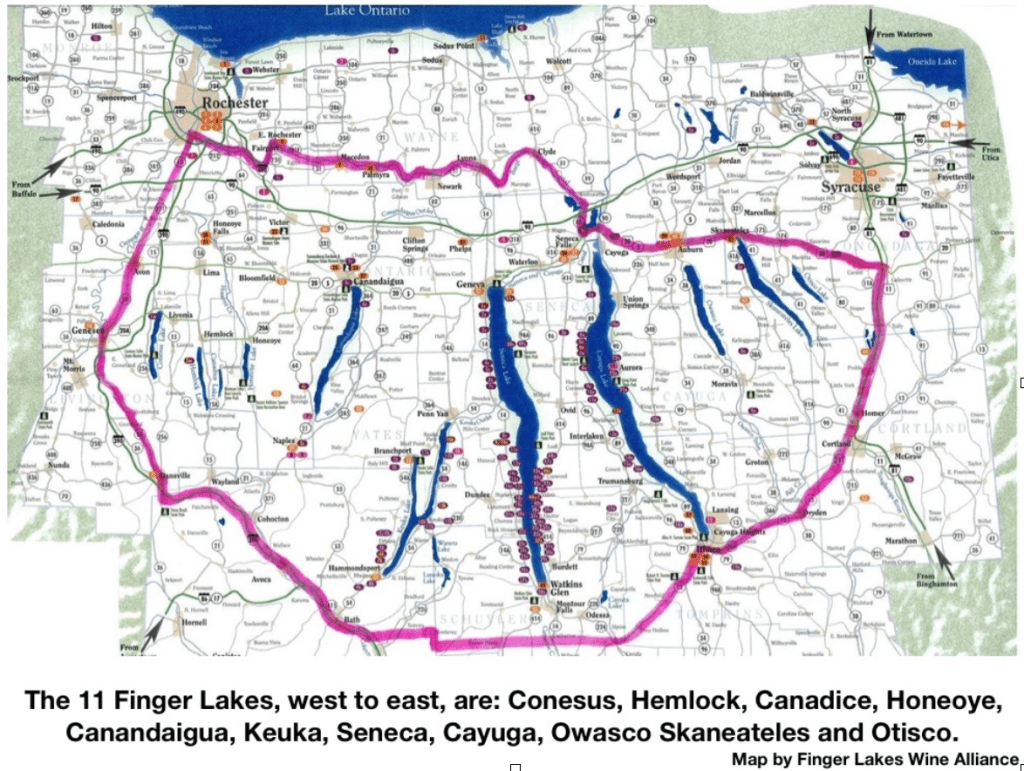
ABOUT THE FINGER LAKES: The 11 lakes were scoured out of upstate New York’s countryside by a series of retreating glaciers, the last of which left around 11,000 years ago.
The long, skinny, north-south-running lakes supported Native American cultures for thousands of years before Europeans elbowed their way in. The largest lakes, Seneca and Cayuga, are named for two of the Iroquois nations that most recently dominated the region.
When the six-member Iroquois Confederacy sided with the British during the American Revolution, Gens. John Sullivan and James Clinton responded with a scorched-earth campaign that torched villages and laid waste to cultivated fields. After the war, much of the land was divvied up into military lots and awarded to Colonial soldiers, speeding up an influx of white settlers.
When water transport was still the easiest way to transport fruits, grains and other bulk goods, the completion of the Erie Canal in 1825 was a boon to Finger Lakes farmers. The canal transformed Syracuse, Rochester and Buffalo into boom towns. But railroads shifted economic attention elsewhere and the region gradually began to be seen as a backwater.
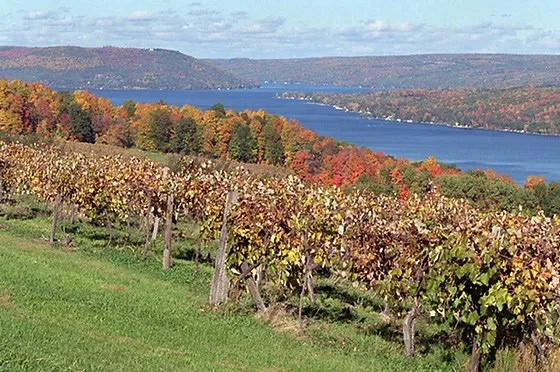
Today the lakes are lined with getaway cottages. Vineyards are scattered across lake-facing slopes, in between the deep gorges carved by lake tributaries.
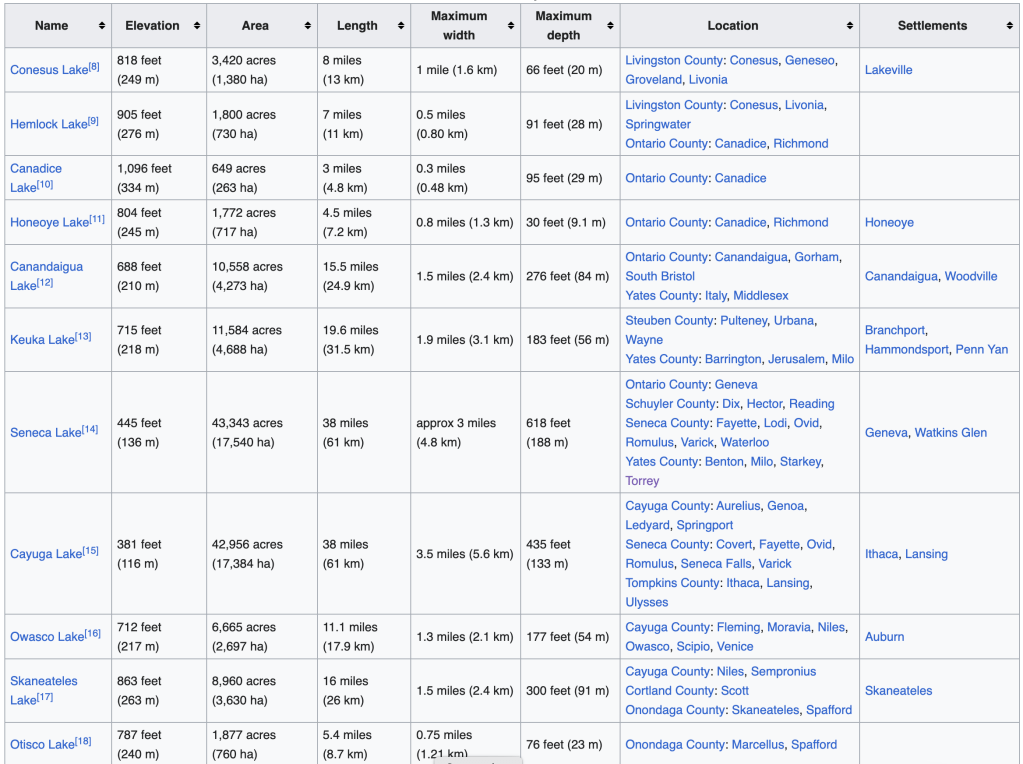
The lakes provide drinking water for several hundred thousand people. Skaneateles supplies the city of Syracuse. Hemlock and Canadice deliver to Rochester. Cayuga, Seneca and Keuka supply dozens of other cites and towns.
 Water Front- Peter Mantius