
DRESDEN, Sept. 10, 2024 — Greenidge Generation LLC is trying to exclude four environmental groups from its bid to convince a court to block a state order to permanently shut down its Dresden power plant by Nov. 1.
The company filed a lawsuit in Yates County Supreme Court last month against the state Department of Environmental Conservation, seeking a court injunction to prevent the forced closure.
The suit was triggered by the agency’s decision in May to finally deny its application to renew its air emissions permit. The DEC said Greenidge had failed to show how the plant would comply with the state climate law.
The environmental groups have asked Judge Vincent M. Dinolfo to allow them party status in the case on the grounds that the DEC cannot adequately represent the interests of their members, who “live, work and recreate near the plant.”
But Greenidge, which operates a Bitcoin mine at the plant, argues in a Sept. 4 filing that the groups’ participation is “completely unnecessary” and would “only delay and unduly complicate” the company’s litigation.

Arguing for the company, Yvonne Hennessey warned that allowing the groups to intervene would create a “dangerous slippery slope” in other litigation involving the state’s 2019 climate law (the Climate Leadership and Community Protection Act, or CLCPA).
“…Dozens if not hundreds of participants could seek and be awarded intervention merely because they have a particular environmental concern,” said Hennessey, an attorney with the firm Barclay Damon.
In response, the groups — Seneca Lake Guardian, Sierra Club, the Committee to Preserve the Finger Lakes and Fossil Free Tompkins — asserted that the standard for intervention has been “liberally construed” by the courts.
“Environmental organizations … are consistently and repeatedly granted intervention in special proceedings challenging government actions that protect the environment and public resources,” lawyers for the group wrote in a Sept. 9 filing.
The environmental groups are represented by Lisa K. Perfetto and others from Earthjustice and Philip H. Gitlen and others from the Albany law firm Whiteman Osterman & Hanna.
Those attorneys argued in a filing Aug. 28 that Greenidge had failed to present convincing evidence of any of the three requirements for a temporary restraining order or preliminary injunction: likelihood of success, irreparable harm or favorable balance of equities.
But if the court decides an injunction is warranted, they argue, Greenidge must be required to post a security (or “undertaking”) to cover damages caused by the injunction. “The purpose and function of an undertaking given by a plaintiff … prior to the granting of a preliminary injunction is to reimburse the defendant for damages sustained if it is later finally determined that the preliminary injunction was erroneously granted,” attorneys for the environmental groups wrote.
The dollar amount of the security would be set by the judge.
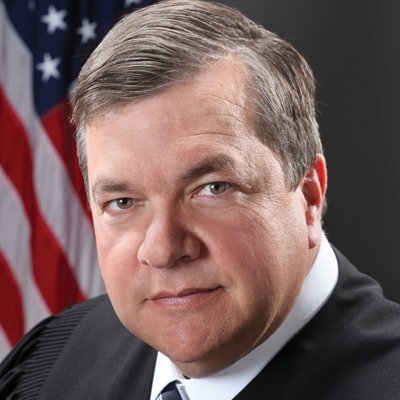
Judge Dinolfo was appointed to the case after Yates County Supreme Court Judge Jason L. Cook recused on Aug. 21.
A day earlier, Judge Cook had issued a temporary restraining order (TRO) barring the DEC from enforcing its order requiring Greenidge to permanently shut down its plant by Sept. 9.
But Nicholas Buttino, an assistant attorney general representing the DEC, asserted that Judge’s Cook’s TRO was not legally enforceable because the agency was never given an opportunity to respond, according to an Aug. 23 letter to Yates County Clerk of Court Carol B. Winslow.
Nevertheless, five days later, Buttino on Hennessey agreed to postpone enforcement of the DEC’s plant closure order from Sept. 9 to Nov. 1 and to suggest a new schedule for the case.
Judge Dinolfo responded by setting a court hearing for 10 a.m., Oct. 29 at the Yates County Courthouse. He gave the DEC until Oct. 10 file papers and Greenidge until Oct. 24 to reply.
Dinolfo is expect to rule on the environmental groups’ motion to intervene later this month.

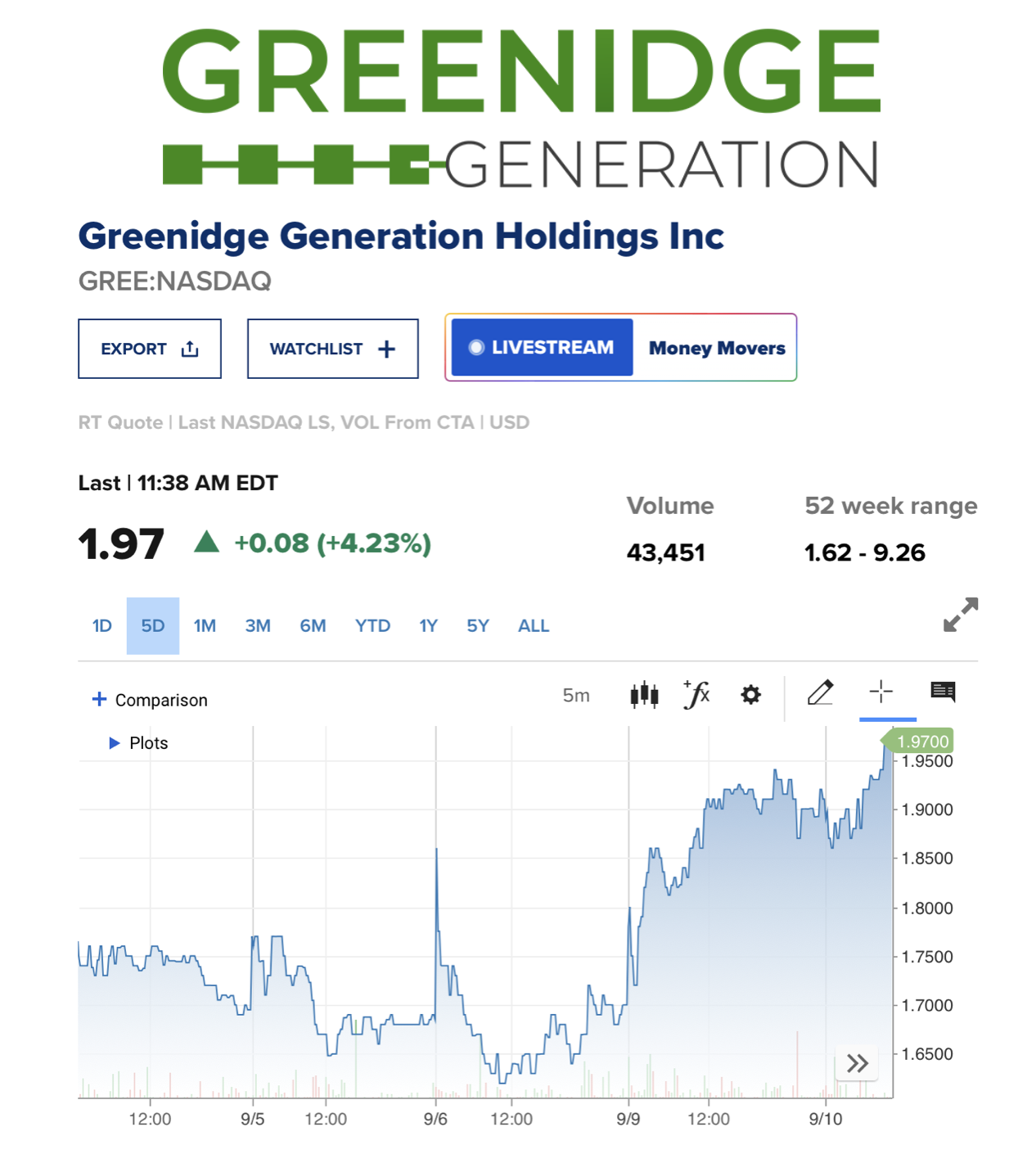
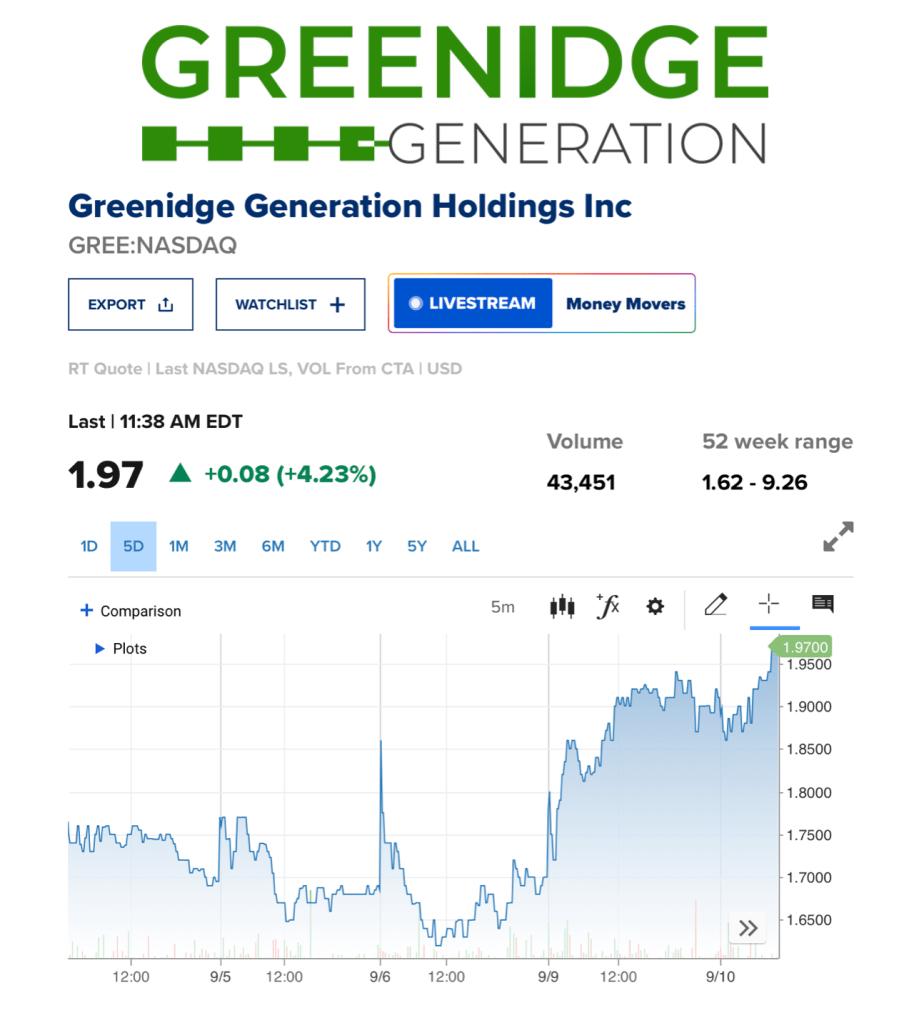
Meanwhile, Greenidge’s common stock sank to its all-time low price of $1.62 during the day Friday. Greenidge CEO Jordan Kovler bought 5,000 shares for $8,598 late that day, according to a company filing with the Securities and Exchange Commission. Shares traded at $1.97 late this morning.
Earlier this year, Greenidge President Dale Irwin sold almost 40,000 shares for more than $110,000.
On Monday, the company announced that it had produced “approximately 55” Bitcoin in August. That included 17 produced by Greenidge-owned mining machines and 38 produced by miners the company hosts at the Dresden plant.
“Greenidge anticipates continuing to upgrade its fleet with newer generation miners over the remainder of 2024 and 2025 and securing additional sites for future development,” the company said in a Sept. 9 press release.

 Water Front- Peter Mantius
